Profiles data structure. More...
#include <Profiles.h>
Public Member Functions | |
| Profiles (std::vector< std::vector< Perf >> &perf_vect, std::string mode="crit") | |
| Profiles (int nb_of_prof, Criteria &crits, std::string mode="crit", std::string prefix="prof") | |
| Profiles (const Profiles &profiles) | |
| bool | isProfileOrdered () |
| void | generateRandomPerfValues (unsigned long int seed=time(NULL), int lower_bound=0, int upper_bound=1) |
| std::pair< std::vector< Perf >, std::vector< Perf > > | getBelowAndAboveProfile (std::string profName, float worst_value, float best_value) |
| void | setPerf (std::string name, std::string crit, float value) |
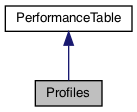
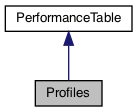
 Public Member Functions inherited from PerformanceTable Public Member Functions inherited from PerformanceTable | |
| PerformanceTable (std::vector< std::vector< Perf >> &perf_vect, std::string mode="alt") | |
| PerformanceTable (int nb_of_perfs, Criteria &crits, std::string prefix="alt") | |
| PerformanceTable (const PerformanceTable &perfs) | |
| void | generateRandomPerfValues (unsigned long int seed=time(NULL), int lower_bound=0, int upper_bound=1) |
| std::vector< std::vector< Perf > > | getPerformanceTable () const |
| std::string | getMode () const |
| bool | isSorted () const |
| std::vector< Perf > | operator[] (std::string name) |
| Perf | getPerf (std::string name, std::string crit) |
| void | sort (std::string mode="crit") |
| void | changeMode (std::string mode) |
| std::vector< Perf > | getAltBetweenSorted (std::string critId, float inf, float sup) |
| std::vector< Perf > | getAltBetween (std::string critId, float inf, float sup) |
| std::vector< Perf > | getBestPerfByCrit (Criteria &crits) |
| std::vector< Perf > | getWorstPerfByCrit (Criteria &crits) |
| bool | isAltInTable (std::string altName) |
| int | getNumberCrit () |
| int | getNumberAlt () |
| void | display () |
| bool | operator== (const PerformanceTable &pt) const |
Friends | |
| std::ostream & | operator<< (std::ostream &out, const Profiles &profs) |
Additional Inherited Members | |
| Protected Attributes inherited from PerformanceTable | |
| std::vector< std::vector< Perf > > | pt_ |
| std::string | mode_ = "alt" |
| bool | sorted_ = false |
Detailed Description
Profiles data structure.
The Profiles class hold the datastructure that implement the theoretical definition of a "profile": the values that delimit two categories. A Profiles object is represented as a PerformanceTable that guarantee the right order of the values. In order to have a correct representation of a set of profile (to delimit all the category of our problem), each profile must be dominated by the one above and must demonate the one below.
Example:
| crit0 | crit1 | ||
|---|---|---|---|
| category 2 | |||
| 0.6 | 0.8 | – profile 1 | |
| category 1 | |||
| 0.4 | 0.5 | – profile 0 | |
| category 0 |
Constructor & Destructor Documentation
◆ Profiles() [1/3]
| Profiles::Profiles | ( | std::vector< std::vector< Perf >> & | perf_vect, |
| std::string | mode = "crit" |
||
| ) |
Profiles standard constructor (PerformanceTable surcharged). Default mode is "crit"
- Parameters
-
perf_vect Vector of performance that models category limits or a PerformanceTable Profiles in "alt" mode refers the mode of the Profiles
◆ Profiles() [2/3]
| Profiles::Profiles | ( | int | nb_of_prof, |
| Criteria & | crits, | ||
| std::string | mode = "crit", |
||
| std::string | prefix = "prof" |
||
| ) |
Profiles constructor without perf values but set of criteria to evaluate performance over (PerformanceTable surcharged) Default mode is "crit".
◆ Profiles() [3/3]
| Profiles::Profiles | ( | const Profiles & | profiles | ) |
Profiles constructor by copy
- Parameters
-
perfs Based performances to copy
Member Function Documentation
◆ generateRandomPerfValues()
| void Profiles::generateRandomPerfValues | ( | unsigned long int | seed = time(NULL), |
| int | lower_bound = 0, |
||
| int | upper_bound = 1 |
||
| ) |
◆ getBelowAndAboveProfile()
| std::pair<std::vector<Perf>, std::vector<Perf> > Profiles::getBelowAndAboveProfile | ( | std::string | profName, |
| float | worst_value, | ||
| float | best_value | ||
| ) |
getBelowAndAboveProfile gets the profiles below and above the given profile. If given profile is the first or last, it will return itself
- Parameters
-
profId id of the profile to get the above and below profiles worst_value worst value found in the dataset used to create the lower bound best_value best value found in the dataset used to create the higher bound
- Returns
- profiles performances (below and above)
◆ isProfileOrdered()
| bool Profiles::isProfileOrdered | ( | ) |
isProfileOrdered checks if the profile performance table is ordered.
- "alt" mode : each row of the performance table denotes a profile. The first row is profile b0 refering to category of rank 0. Hence, each criterion must be ordered in descending order. ie : for all i,j : b_i+1_j > b_i_j
- "crit" mode : each row of the performance table denotes a criteria modeled by its category limits. Hence, each criterion is independant to one another but for one criterion each category limit (ie column) must be ordered in descending order. The first column is cat0 refering to category of rank 0. ie : for all criterion (row) and i : cat_limit_i+1 > cat_limit_i
- Returns
- isOrdered
◆ setPerf()
| void Profiles::setPerf | ( | std::string | name, |
| std::string | crit, | ||
| float | value | ||
| ) |
setPerf set a Perf given the alt name, crit and value. Unefficient since using [] operator... and should be avoided.
- Parameters
-
name name of the alt or profile we want to update crit name of the crit we want to update value new perf value
Friends And Related Function Documentation
◆ operator<<
|
friend |
Overloading << operator for Profile class
- Parameters
-
out ostream profs Profile object
The documentation for this class was generated from the following file:
- /Users/ThomasVindard 1/Desktop/3A/Projet/fastPL/include/types/Profiles.h